


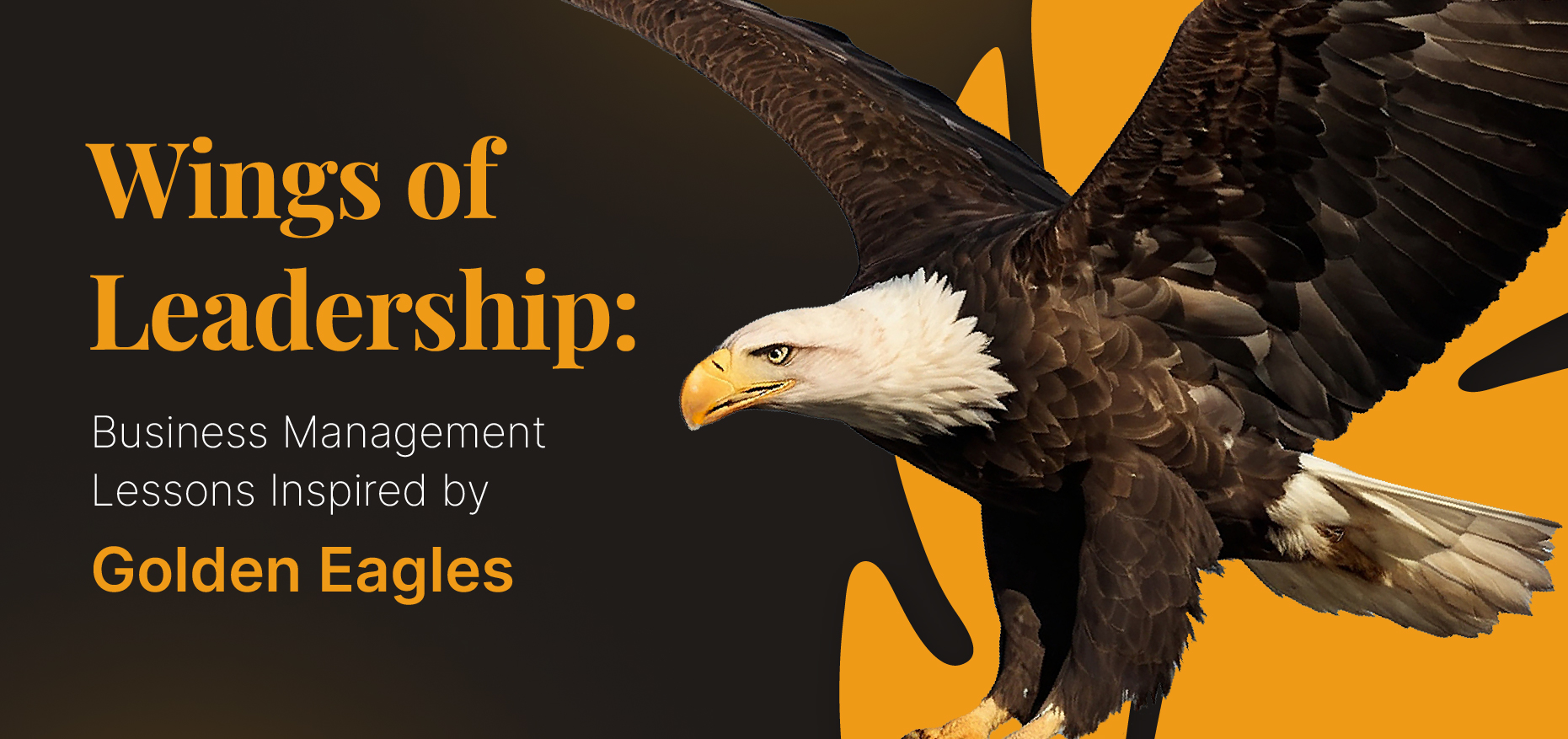
Wings of Leadership: Business Management Lessons Inspired by Golden Eagles
Wings of Leadership: Business Management Lessons Inspired by Golden Eagles
The golden eagle, renowned for its regal stature and keen predatory instincts, provides a compelling analogy for understanding effective business management. Drawing parallels between the features and actions of a golden eagle and managing or growing a business can provide insightful perspectives on leadership, strategy, resilience, and more.
Much like the golden eagle’s keen vision and intense focus during hunting, successful business leaders possess the foresight to identify opportunities and the determination to stay committed to strategic objectives. Let’s now examine how the characteristics and actions of these magnificent birds can be metaphorically applied to business management and growth.
Keen and Acute Vision
Golden eagles have exceptional eyesight, allowing them to spot prey from great distances. Similarly, successful business leaders possess vision and foresight, enabling them to effectively identify opportunities, anticipate challenges, and navigate the competitive landscape.
Singular Focus
Golden eagles demonstrate intense focus when hunting, honing in on their target with unwavering determination. In business, focus is crucial for prioritizing goals, allocating resources efficiently, and staying committed to strategic objectives despite distractions or setbacks.
Nimble and Adaptable
Golden eagles are adaptable predators, capable of thriving in diverse environments and conditions. Likewise, businesses must be agile and adaptable, willing to pivot strategies, innovate, and embrace change to remain competitive and resilient in dynamic markets.
Strategic Planning
Golden eagles employ strategic tactics when hunting, utilizing terrain, wind patterns, and other factors to their advantage. Similarly, effective business leaders develop and execute strategic plans, leveraging market insights, industry trends, and competitive analysis to achieve sustainable growth and success.
Steadfast Resilience
Golden eagles exhibit resilience in the face of adversity, overcoming challenges such as harsh weather conditions or scarcity of prey. Likewise, businesses encounter obstacles, setbacks, and economic downturns, requiring resilience, perseverance, and a proactive approach to bounce back and thrive in the long term.
Proactive Leadership
Golden eagles often hunt alone but may form temporary alliances with other eagles when pursuing larger prey. In business, leadership is essential for inspiring teams, fostering collaboration, and driving collective efforts toward shared goals, whether leading solo ventures or strategic partnerships.
Continuous Learning
Golden eagles are lifelong learners, refining their hunting techniques and adapting to changing environments throughout their lives. Similarly, businesses must embrace a culture of continuous learning, innovation, and improvement to stay ahead of the curve and drive sustainable growth in an ever-evolving marketplace.
By drawing inspiration from the characteristics of a golden eagle, business leaders can cultivate strategic thinking, resilience, adaptability, and a forward-looking mindset to manage and grow their organizations effectively amidst challenges and opportunities.
Navigating Challenges: Golden Eagle Strategies for Businesses
When a crow swoops in to attack, golden eagles instinctively respond with a range of strategic defenses that have valuable parallels in business management. From swift assessments of threats to strategic positioning and adaptive learning, these defensive maneuvers embody proactive risk management, strategic resilience, and adaptive decision-making—essential attributes for thriving in dynamic business landscapes.
Assessment of Threat
When confronted by a crow, a golden eagle first assesses the level of threat. Similarly, in business, leaders must accurately evaluate challenges or threats to their organization, whether from competitors, market shifts, or internal issues.
Swift Response
Golden eagles respond swiftly to crow attacks, using their agility and speed to evade or counter the threat. In business, prompt action is essential when facing challenges. Leaders should have contingency plans in place and be ready to adapt strategies quickly to mitigate risks and minimize potential damage.
Strategic Positioning
Golden eagles often maneuver to position themselves advantageously when under attack, using their strength and agility to gain the upper hand. Similarly, in business, strategic positioning involves leveraging strengths, resources, and market insights to outmaneuver competitors and capitalize on opportunities.
Defensive Tactics
Golden eagles may employ defensive tactics such as vocalizing loudly, flapping their wings, or using their talons to fend off crows. Likewise, in business, leaders may need to defend their organization’s interests through legal means, public relations strategies, or proactive communication to protect their brand reputation and market position.
Adaptation and Learning
Golden eagles learn from their encounters with crows, refining their defensive strategies over time. Resilience and adaptability are key in business. Leaders should analyze past challenges, gather feedback, and continuously improve processes to navigate future threats and adversities better.
Seeking Support
In some cases, golden eagles may seek support from other birds of prey or their mate to repel crow attacks. Similarly, in business, leaders can seek counsel from mentors, advisors, or industry peers to gain fresh perspectives, guidance, and support in times of crisis or uncertainty.
Apply Our Golden Eagle Tactics Today and Soar Towards Success
Drawing insights from the golden eagles’ strategic nature, business leaders can learn valuable lessons in effective leadership, strategic planning, resilience, and adaptability. Just as golden eagles navigate with vision and precision, businesses can chart their course with foresight, agility, and a proactive mindset. Embracing these natural lessons not only helps overcome challenges but also propels organizations to greater success and sustainability in today’s dynamic business landscape.